
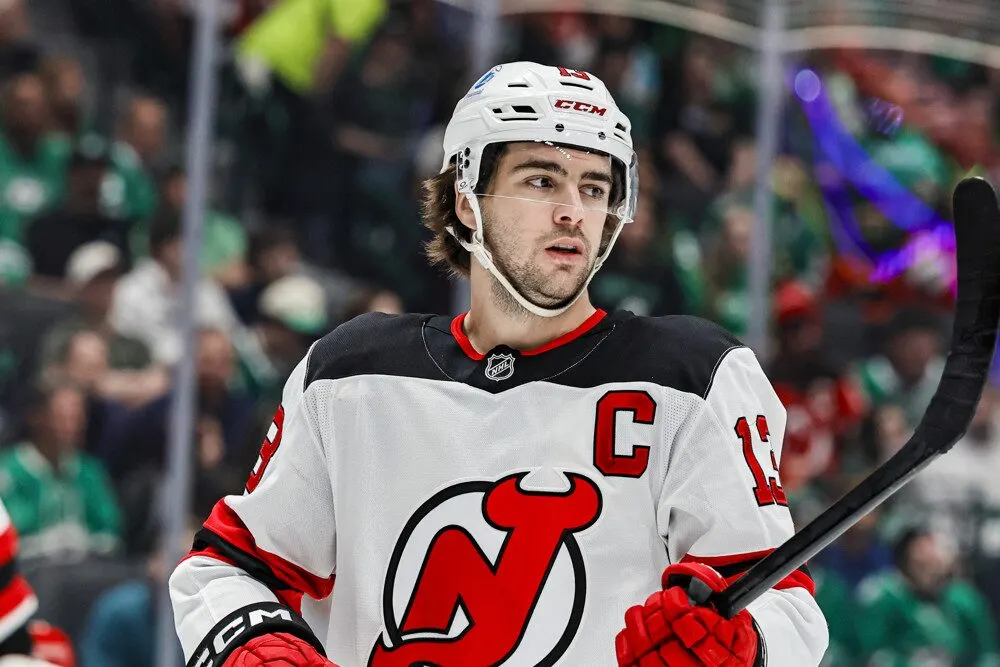

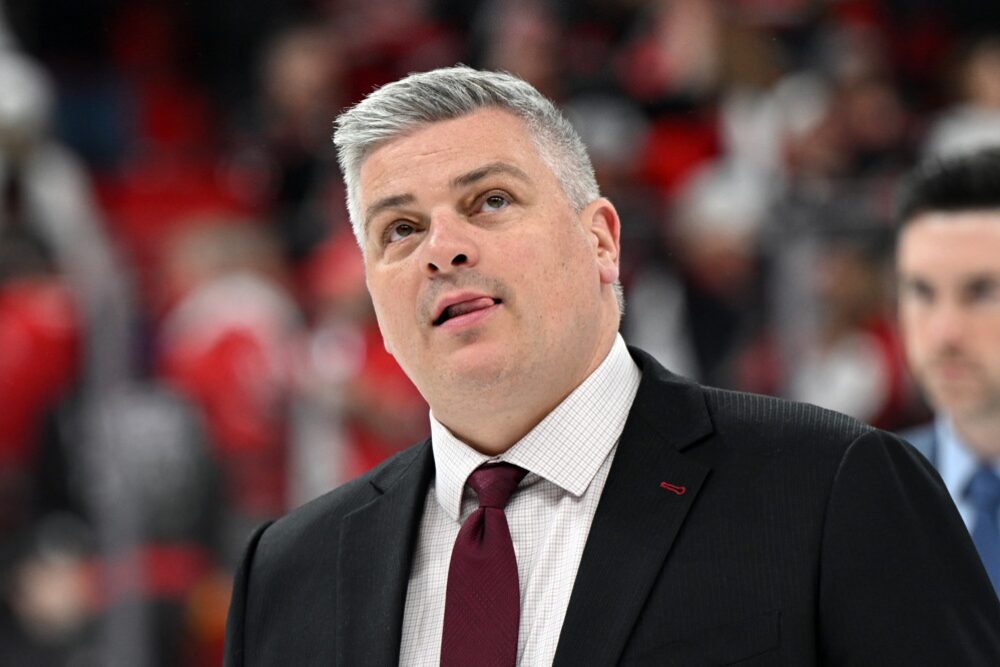
New Jersey missed the mark last season, the fan base is restless, and the pressure has landed where it usually does: on the coach. Sheldon Keefe is squarely on the hot seat heading into the year, the convenient answer to a disappointing season. The problem with the convenient answer is that the underlying numbers do not support it. The Devils were not a badly coached team. They were a good process team that ran into one of the worst finishing seasons in the league, and firing the coach would be treating the symptom while ignoring the disease.
| Metric | Number | The read |
|---|---|---|
| 5-on-5 expected-goals share | 51% | A plus-possession team that drove play |
| Goals for vs expected | -35 | Historically poor finishing luck |
| Jack Hughes on/off swing | +13 | The stars kept tilting the ice |
| Standings result | Underachieved | A good process team with nothing to show |
Start with the number that reframes the whole season. New Jersey controlled 51 percent of the expected goals at five-on-five, a genuine plus-possession team, and then scored just 226 goals on roughly 261 expected. That is a 35-goal finishing shortfall, one of the largest in the league, and it is the actual story of the Devils' season. A team that generates its chances and cannot bury them looks broken in the standings and healthy under the hood, and that gap is almost never the coach's fault. Shooting percentage regresses to the mean; a 51 percent structure tends to persist. New Jersey has the durable thing and lacked the fluky one.
The stars did their jobs
If the system were the problem, you would see it in the play-drivers, and you do not. Jack Hughes posted 77 points and a plus-13 on-off in an injury-shortened year, and captain Nico Hischier put up 66 points and a plus-10 while eating the hard defensive minutes. The top of New Jersey's lineup tilted the ice hard, which is exactly what a well-coached team's best players do. The Devils were not failing to create; they were failing to finish, and no whiteboard adjustment fixes a team-wide shooting slump.
What actually went wrong
The real culprits are the ones the hot-seat talk skips. First, the finishing luck: a 35-goal shortfall is the kind of variance that sinks a season and then reverses the next, which is why I called New Jersey the unluckiest team in hockey at the time. Second, health: Jack Hughes, the engine, missed a chunk of the year, and a team leaning on him feels every game he sits. Third, the crease: Jacob Markstrom finished nearly 12 goals below expected, a genuine problem, while Jake Allen was the steadier option. Those are roster and luck failures, not coaching ones, and none of them gets solved by a new voice behind the bench.
Why firing Keefe would be the wrong move
Changing coaches resets none of the actual problems. A new bench boss does not raise a team's shooting percentage, does not heal Jack Hughes, and does not stop soft goals. What a panicked firing does is mistake variance for process failure, and the teams that overreact to an unlucky year have a habit of blowing up something that was quietly working. New Jersey drove play at a 51 percent clip; that is the hard part of coaching, and it was there. Throwing it out because the pucks did not go in would be solving the wrong problem loudly.
The honest counter
To be fair to the critics, coaches are accountable for results, and there are legitimate questions Keefe should answer. A 51 percent team should convert better on special teams than New Jersey did, and if the power play or the defensive-zone structure has real flaws, those are on the staff. Coaches can also lose a room, and no spreadsheet measures that. But the weight of the evidence points one way: the process was sound, the finishing and health were not, and the difference between this season and a good one is mostly luck that regresses rather than coaching that failed.
What New Jersey should actually do
The productive version of this offseason is boring and correct. Address the crease, because Markstrom's minus-12 is a real, fixable hole. Get Jack Hughes and the rest of the top six healthy, because availability was half the problem. And then trust the 51 percent structure and the finishing to climb back toward normal, because both almost certainly will. The Devils are closer to good than their record says, which is the whole point: they are the bounce-back bet, not the blow-it-up case.
The cost of a panic firing
There is a hidden price to firing a coach the numbers exonerate, and it is paid in the room. Players read these decisions closely, and when a good, unlucky season ends with the coach out the door, the message received is that results are judged on outcomes no one controls rather than the process everyone does. That is corrosive in a market where a team is trying to build something stable, because the next coach inherits a group that has learned its bosses panic, and a front office that has traded a season of continuity for the illusion of action.
There is also the matter of what replacing Keefe would actually change, which is very little. The Devils' problems last season were a hurt star and a leaky crease, and neither is a coaching fix. A new voice does not raise a goaltender's save percentage or keep a top scorer healthy through 82 games, and the underlying structure Keefe oversaw was that of a good team, not a broken one. Swapping the coach treats a symptom the data does not even identify as the disease, and it resets a system that was working while the real issues, health and goaltending, go unaddressed.
The teams that navigate a down year well are the ones that can tell the difference between a bad process and bad luck, and hold their nerve when the underlying signs are good. New Jersey has those signs. The discipline to keep the coach, fix the net and trust the bounce-backs is harder than making a splashy change, but it is what separates franchises that compound from ones that keep starting over.
What it means
Sheldon Keefe's job hangs on a season decided largely by variance, which is the wrong reason to fire or keep any coach. The Devils were a good, unlucky team with a hurt star and a leaky net, and the data says the fix is a goaltender and health, not a scapegoat. Fire the shooting luck, not the coach. If New Jersey keeps its nerve, this looks like a detour. If it panics, it risks turning a bounce-back season into the start of something worse.