
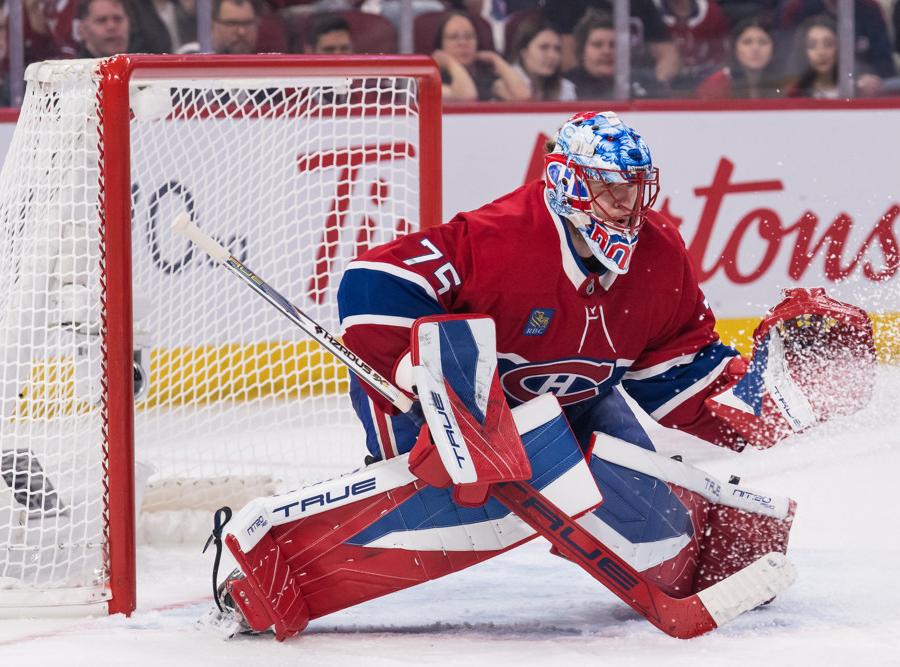

The feel-good story of last season was supposed to be the Montreal Canadiens, the rebuild that arrived years ahead of schedule - 106 points, 48 wins, Cole Caufield scoring 50, Nick Suzuki hitting 100, a building that had not felt like this in a decade. The joy was real, and the young core behind it is real too.
The 106 points, though, were on loan. And the numbers say the bill comes due next season.
What the standings said, and what the ice said
Start with the disconnect, because it is stark.
| Measure | Montreal | The read |
|---|---|---|
| Standings finish | 106 pts · 48 wins | Fifth in the NHL |
| 5-on-5 expected-goals share | 48% | Bottom third - out-chanced most nights |
| 5-on-5 goals vs expected | +23 | Finished well above their chances |
| 5-on-5 goals against vs expected | -14 | The goaltending stole extra wins |
Montreal finished fifth in the NHL in points. At five-on-five - where the overwhelming majority of a season is played - they controlled just 48 percent of the expected goals. That is not a contender's number. It is a bottom-third number, the possession profile of a team that spent most nights getting out-chanced. Fifth in the standings, twenty-somethingth in the underlying play. Those two facts do not belong in the same sentence, and the gap between them is where next season's disappointment is hiding.
For contrast, look at the team that actually won it all. The champion Carolina Hurricanes posted a 56 percent expected-goals share to go with their 113 points - the standings and the underlying play pointing the same direction. That is what a real season looks like: you win because you out-play people. Montreal won in spite of getting out-played. So how does a team that gets out-chanced pile up 48 wins? Two ways, and the Canadiens did both.
They shot the lights out and got saved
At five-on-five, Montreal scored 23 more goals than their chances said they should have. That is a huge finishing surplus, and part of it has a name: Cole Caufield is a genuinely elite shooter, and elite shooters beat their expected goals every year - real, repeatable skill, not luck. But 23 goals above expected across a whole lineup is more than one sniper on a heater. It is an entire team converting at a rate that history says does not hold.
Then there is the other end. Montreal allowed 14 fewer five-on-five goals than expected, and that one also has a name: Jakub Dobes, whose plus-17 goals saved above expected made him one of the better young goalies in the league. Again, partly real - Dobes looks like a keeper. But a rebuild leaning on a young goaltender to erase two goals a week is leaning on the most volatile position in sports to keep doing the least predictable thing.
Add it up and Montreal pulled roughly 37 extra goals at five-on-five out of finishing and goaltending combined - the two inputs that swing hardest, season to season, of anything in hockey. Strip even half of that away and the 106-point team is a bubble team fighting for a wild card.
This is not a takedown of the young core
Let me be clear, because this is where the pushback lives. Caufield, Suzuki, Lane Hutson on the blue line, Dobes in net - that group is good, it is young, and it is going to be good for a long time. The arrow points up. Nothing here argues otherwise.
What the numbers say is narrower and more important: the 106 points overshot where this team actually is right now. Montreal got out-played on the run of play and won anyway, because the puck went in at one end and stayed out of the net at the other more than it had any right to. That is a wonderful season to live through. It is a dangerous baseline to plan around.
Here is the trap every young team's fan base falls into after a year like this: they treat the result as the new floor. 106 points becomes the expectation, and anything less feels like a step backward, like something broke. But nothing will have broken. The shooting will drift back toward league norms, Dobes will have a cold month the way every goalie does, the 48 percent will start showing up on the scoreboard the way it stubbornly refused to last year - and a team that is genuinely still improving could finish with fewer points, a worse seed, and be a better hockey team than it was.
What actually has to change
The fix is not complicated, but it is not automatic either. Montreal has to raise that 48 percent - drive more play at five-on-five - so the results stop depending on the bounces. That means adding a piece or two down the middle and on the back end, and it means the young forwards learning to tilt the ice, not just finish the chances they get. Some of it comes free as a 21-year-old core matures. Some of it has to be built, in trades and drafts and another year of development.
Do it, and the 106 points stops being a mirage and becomes a floor for real. Skip it - run the same group back and trust the shooting and the goaltending to save them again - and the standings will correct, and the correction will sting a fan base that believed it had already arrived.
The bottom line
Montreal's season was one of the best stories in hockey, and the long-term future in that market is genuinely bright. But the 106 points were built on the two things that regress hardest, stacked on top of a five-on-five game that ranked in the league's bottom third. The Canadiens did not play like the fifth-best team in the NHL last year. They finished like it - and those are very different things. Next season is where the difference gets settled. Enjoy the memory of 48 wins. Just do not pencil it in again.