

 San Jose Sharks
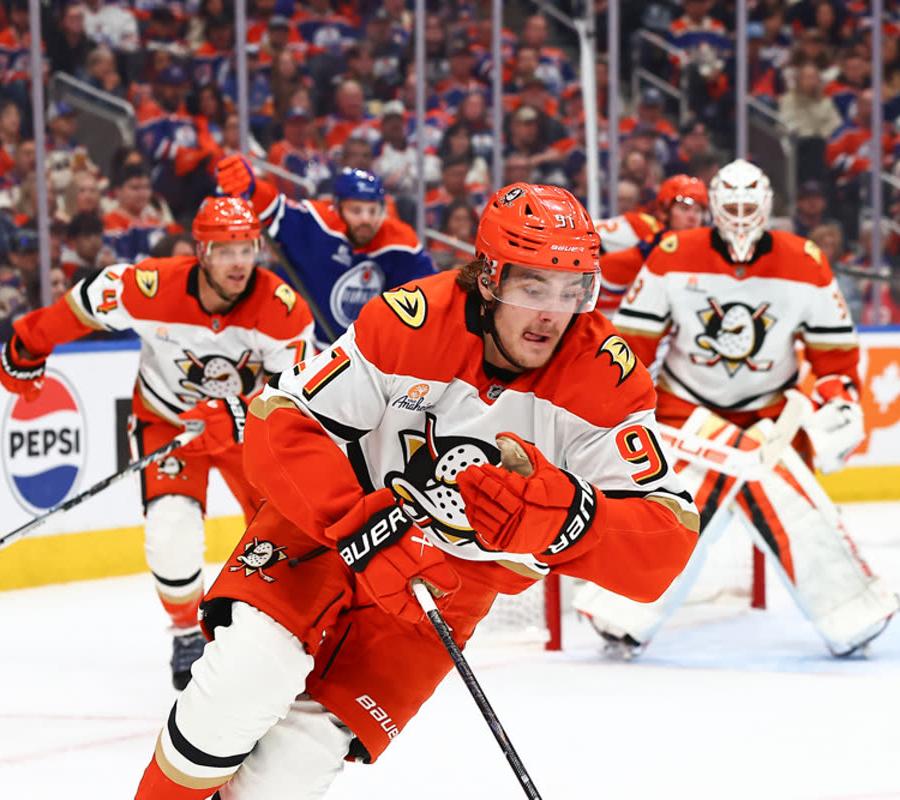
When Anaheim matched Philadelphia's offer sheet and handed Leo Carlsson the largest cap hit in the NHL, the reflexive take wrote itself: eighteen million dollars for a 20-year-old who scored 67 points is an overpay, full stop. The reflexive take is also lazy. It reads the box score and stops there. The underlying numbers tell a more interesting - and more defensible - story, and it hinges on the difference between a player who scores and a player who tilts the ice.
Start With the Case Against, Because It Is Real
Sixty-seven points is not $18 million production. It is not close. By most points-based valuation models, a 67-point forward prices somewhere in the $12-14 million range on today's market. On the raw output of last season alone, Anaheim is paying a four-to-six-million-dollar premium, and anyone who tells you otherwise is grading the contract on the name instead of the number. That is the honest floor of this analysis, and it is why the deal made half of hockey recoil.
But a contract like this was never a bet on last season. It was a bet on the 20-year-old underneath it - and that is where the box score stops being useful.
He Does Not Just Score. He Drives the Play.
Here is the number that changes the conversation: with Carlsson on the ice at five-on-five, the Anaheim Ducks controlled 55 percent of the expected goals and 56 percent of the shot attempts. On a rebuilding team. At age 20. That is not a passenger padding points on a good line; that is a driver bending the ice in his team's favour every shift. Plenty of 70-point players post on-ice numbers below 50 percent - they score, but the game tilts against their team when they are out there. Carlsson is the opposite, and territorial control, not raw finishing, is the trait that actually predicts winning. It is the thing you are genuinely paying $18 million to keep.
The power play sharpens the case. On the man advantage, Anaheim ran an 86 percent expected-goals share with Carlsson on the ice, and he added 16 power-play points. Every $18 million forward has to be a special-teams weapon; he already is one. He also drew 22 penalties while taking almost none - the quiet, compounding value that never makes a highlight reel but shows up in the standings.
The Regression Flag, Stated Honestly
A real analysis argues the other side too. Carlsson scored 29 goals on 22.4 expected - he beat his shot quality by nearly seven goals. Some of that is genuine finishing talent; a 20-year-old who outscores his chances is usually telling you something true about his hands. But some of it is heat, and heat cools. If his finishing regresses toward his expected rate, the goal total dips even if he plays exactly as well. There is also a deployment asterisk: Anaheim started him in the offensive zone roughly 67 percent of the time, a shelter that flatters those on-ice percentages. Strip some of it away and the play-driving is still positive - very good, not yet historic.
The Comparison That Frames the Whole Bet
To understand why Anaheim paid it, look next door. Macklin Celebrini, the same age, is about to command north of $20 million on his own extension - and the two young centres split the exact question that defines this market.
| Metric | Leo Carlsson | Macklin Celebrini |
|---|---|---|
| Age | 20 | 20 |
| 2025-26 points | 67 | 115 |
| Goals vs expected | 29 on 22.4 | 45 on 31.8 |
| On-ice xGF% (5-on-5) | 55% | 50% |
| Offensive-zone start rate | ~67% | ~72% |
| Penalties drawn | 22 | 32 |
| Cap number | $18.0M signed | $20M+ looming |
Celebrini is the vastly superior scorer - 115 points to 67, a GameScore that laps the field. But note the wrinkle the box score hides: at five-on-five, Carlsson is the better play-driver, a 55 percent expected-goals share to Celebrini's even 50. The pricier young centre posts the gaudier numbers; the cheaper one tilts the ice harder once the special teams are stripped away. Neither is wrong - but it tells you $18 million for Carlsson is not the outlier it looks like, in a market where the man about to sign for more is not clearly the more complete even-strength player.
The Verdict
Anaheim made the right bet. Not a slam dunk, not a steal - the right bet, with real risk attached. The team is paying today for a projection: that a 20-year-old who already drives play at a 55 percent clip and quarterbacks an elite power play turns 67 points into 90, and that a rising cap makes $18 million look reasonable by year three. The play-driving foundation that makes that leap plausible is rare, and it is exactly the trait you commit to long-term at this age.
The failure case is real too. If the finishing cools, the deployment stays sheltered, and the points stall in the 70s, this becomes one of the heaviest anchors in the league - 17 percent of a cap on a very good complementary star rather than a franchise driver. That is the tightrope Anaheim chose to walk, eyes open, because the alternative was losing the player for four first-round picks and gutting the rebuild it just spent years constructing.
Grade the deal on the 67 points and you will call it a mistake. Grade it on the 55 percent, the penalties drawn, the power play and the age, and you understand why the Ducks did not blink. The truth sits in between - and the truth is that the best young play-driver in the sport is worth betting on, even at a number that will make everyone nervous until he grows into it.