
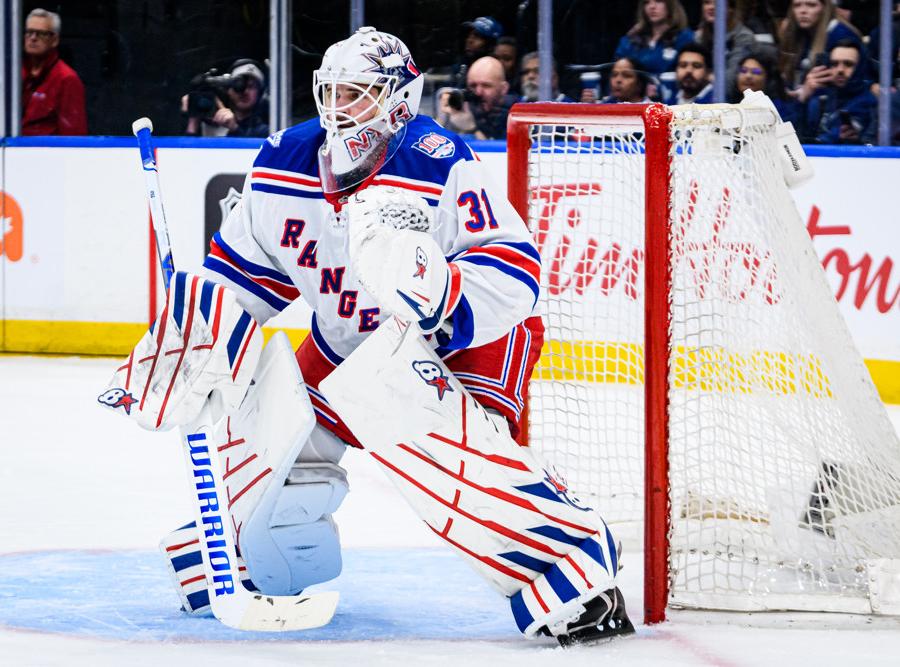

They had 114 points and the best record in hockey in 2023-24. They finished last in the Eastern Conference in 2025-26. Panarin is in Los Angeles. Shesterkin is still extraordinary. The questions about Fox, Miller, Zibanejad, and Lafreniere have no easy answers. Madison Square Garden deserves better and will have to wait.
By Pucky Editorial · May 2026 · 2025–26 Season Review Series
Phase 1 · Oct–Jan: Promising, Then Injured
Trocheck UBI early · Shesterkin excellent · not scoring enough
Phase 2 · Feb–Mar: The Retool Declaration
Drury letter to fans · Panarin dealt to LA Kings · Soucy, Carrick, Othmann moved
Phase 3 · Mar–Apr: Post-Deadline Exhale
Lighter locker room · rookies step up · Perreault shines · season ends 37th in points
Two years. That is how long it took the New York Rangers to go from the Presidents' Trophy, 55 wins, 114 points, the best record in the NHL, to the worst record in the Eastern Conference. Two years between Artemi Panarin scoring 120 points and Artemi Panarin being traded to the Los Angeles Kings for assets before the Olympic break. Two years between the franchise's best regular season in modern history and a home record of 14-20-7 in the building that is the most recognised hockey arena on earth.
The speed of the collapse is what makes the 2025-26 New York Rangers season so difficult to process for the people inside the organisation and genuinely stunning for anyone outside it. This is not a franchise that was mismanaged into irrelevance over a decade, it is a franchise that won the Presidents' Trophy in 2023-24, made two Eastern Conference Finals in three years, and then unravelled at a pace that caught everyone. The players who were in the lineup in 2023-24 are largely the same players in the lineup now. The coaching staff changed. The results changed more.
The Three-Year Arc
From the Best Record in Hockey to the Worst in the East, The Numbers Tell the Story.
2023-24 · Peak 55-23-4 · 114 pts
Presidents' Trophy · ECF appearance · Panarin 120 pts · Shesterkin elite
2024-25 · Fall 39-36-7 · 85 pts
Missed playoffs by 6 pts · Laviolette fired · Trouba stripped of captaincy
2025-26 · Bottom 34-39-9 · 77 pts
Last in the East · Panarin traded · Sullivan first year · retool declared
The Rangers went from franchise records in 2023-24 to their fewest points in a full schedule since 2018-19, all while keeping substantially the same roster core. The structural questions about why the same players produced dramatically different results in consecutive seasons do not have simple answers, which is precisely why the summer ahead is the most important for the franchise in years.
How 2025-26 Played Out, A Season in Three Distinct Phases
Phase 1, October to January Optimism fades · injuries compound early struggles
The offseason additions looked right on paper. GM Chris Drury hired Mike Sullivan, two Stanley Cups with Pittsburgh, a coaching pedigree as respected as any in the league, to replace the fired Peter Laviolette. They signed JT Miller as their new captain and added Vladislav Gavrikov on defence. The expectation was that a team which had gone 39-36-7 the prior year, bad, but not catastrophically bad, would respond to a new voice and return to something closer to their 2023-24 form. Drury traded Chris Kreider to Anaheim, ending a long era.
The first alarm came almost immediately. Vincent Trocheck missed time early with an upper-body injury, and the team struggled without him in ways that highlighted how structurally dependent they were on his faceoff wins, his defensive work, and his line chemistry with the forwards around him. When Shesterkin suffered a lower-body injury on January 5 and was lost until after the Olympic break, the situation deteriorated further. The team went 9-20-3 without Shesterkin in the lineup, a record that tells you everything about what he provides and how little support exists behind him. By the time the Olympic break arrived, the Rangers were at the bottom of the Eastern Conference and the conversation had shifted from "when will they get healthy and compete" to "what happens at the trade deadline."
Phase 2, The Trade Deadline · February–March 6 Retool declared · Panarin traded · roster stripped back
Drury did something unusual for a GM of a major-market team: he wrote a letter to Rangers fans confirming that the organisation was retooling. Not rebuilding, the language was deliberate. Retooling implies the core is intact and being reshaped around it rather than stripped down. Whether that distinction survives the coming summer is the most important question the franchise faces, but at the time of the letter it was the honest articulation of what was happening. The moves that followed were significant. Artemi Panarin, whose contract was expiring and who had made clear he was not interested in a team-friendly extension, was dealt to the Los Angeles Kings before the Olympic break. He had served as alternate captain from October 7 and had 19 goals and 38 assists in his time before being moved. Carson Soucy went to the Islanders. Sam Carrick to Buffalo. Brennan Othmann to Calgary.
The names left on the roster, Trocheck, Lafreniere, Fox, Miller, Zibanejad, were trade candidates at various points of the deadline period and remained. Drury chose to hold them, either believing in their contribution to the retool or finding no return that justified moving them. The decision to keep Trocheck in particular surprised observers who had expected him to be the next domino. He remains on the roster heading into the summer as the franchise's most movable significant asset. The deadline's aftermath was messy: rumours of locker room turmoil swirled publicly in ways that are unusual even for a franchise accustomed to tabloid scrutiny.
Phase 3, Post-Deadline to Season End Weight lifted · rookies emerge · Zibanejad and Lafreniere find form · too late
Something shifted after the deadline. The locker room, stripped of the trade speculation and the uncertainty about who would be next to leave, played with more freedom. Zibanejad found his best form of the season post-Olympic break. Lafreniere, who had been one of the most discussed trade candidates for multiple summers, scored 10 goals and 18 points in 18 games in the post-deadline stretch, the best sustained run of his NHL career. Gabe Perreault, the 20-year-old rookie who had been playing on a line with Zibanejad and Lafreniere for most of the season, continued to do things that gave the fanbase genuine hope: 11 goals and 26 points in 48 games, quiet competence and genuine upside from a player whose development is the most encouraging individual story of this disaster of a season.
But a six-game losing streak in mid-March ended any theoretical playoff hope, and the final stretch was played for development purposes rather than competitive ones. They finished last in the Eastern Conference. They were eliminated from playoff contention in late March. The season ended having produced the fewest points in a full schedule since 2018-19, the year the franchise finished 32nd in the league and began the rebuild that produced the 2023-24 Presidents' Trophy team. The parallels are uncomfortable. So are the questions they raise.
The Defining Transaction, Artemi Panarin to Los Angeles Kings
The Player Who Made Their Presidents' Trophy Season Possible Left for the West Coast. What They Got Back Will Determine Whether the Retool Works.
Panarin's final contract year in New York was the dominant off-ice narrative of the entire 2025-26 season. His seven-year, $81.5 million deal expired at season's end, and his preference, made known to the organisation before the trade deadline, was not to extend at anything resembling a team-friendly number. The Rangers, in no position to offer a market-rate contract on a roster that finished last in the East, dealt him to the Los Angeles Kings.
In 2023-24, Panarin had 120 points. He was the best winger in the Eastern Conference. He carried the Rangers through stretches where everyone else was inconsistent. His departure closes a chapter of Rangers hockey that produced some of the most exciting seasons the Garden has hosted since the Messier era. The loss of his production, 57 points in his partial 2025-26 season before the trade, is not replaceable from within the current roster. What the Rangers received from Los Angeles will be the most scrutinised transaction in their offseason because the return from a 120-point winger should be sufficient to accelerate the retool by years rather than months. If it is, Drury's letter to fans about retooling rather than rebuilding becomes credible. If the return was inadequate, the summer becomes the reckoning.
Panarin at 34 is still Panarin. The Kings acquired an elite winger in the prime of his late career who will make them immediately more dangerous. What New York got was the future the trade was supposed to provide. Whether it is enough is the offseason's central question.
Who Delivered, Who Disappointed, Who Offers Hope
2025–26 Individual Season Grades
25-19-6 · .912 SV% · 2.50 GAA · Team went 9-20-3 without him
The most important Ranger for the fourth consecutive season, and the one who least deserved the team around him in 2025-26. When healthy, he was the reason they were competitive in individual games, 2.16 GAA and .911 SV% over his last eight starts despite a 3-5-0 record behind him. The 9-20-3 record without him is the single most damning stat of the entire Rangers season. He missed time with a lower-body injury sustained January 5 and returned after the Olympic break to continue performing at an elite level with almost no support. He is 30 years old, in his prime, and currently serving as a luxury yacht keeping a sinking boat from going under faster than it should.
34G–44A–78 pts · Team leader in goals and points · Strong Olympic performance
Led the team in scoring with 78 points and was the one veteran forward who consistently produced regardless of linemates. His second-half form, significantly improved after the Olympic break, where he helped the United States win gold, raised his season total to the kind of number that makes him a legitimate top-line centre. The question surrounding him is systemic rather than individual: he produced 78 points on a team that finished last in the East. What does that production look like surrounded by better players? The Rangers will be hoping to find out. He is the franchise's best forward asset in a summer that requires significant decisions.
~44A · +5 (team co-leader) · Consistent two-way excellence despite team struggles
The Norris Trophy winner continued to be one of the few consistent positives in a season full of negatives. His 44 assists tied Zibanejad for the team lead, and his +5 was the best on a team with a deeply negative overall differential. Critically: in a season where the team allowed 250 goals and conceded more than they scored, Fox was one of only two Rangers with a positive plus-minus. He is the player most central to what the retool needs to build around, the two-way defenceman who makes everything function, and his future in New York (he is under contract) is the most structurally important decision the organisation makes over the next two years.
11G–15A–26 pts in 48 GP · Top-six role all season · Best story of the year
The unambiguous bright spot of a dark season. Perreault played on a line with Zibanejad and Lafreniere for most of the year and handled the responsibility with a maturity that belied his age. His 26 points in 48 games, playing against top-six competition from the first week, represent a development trajectory that gives the fanbase something concrete to anticipate. He is the evidence that Chris Drury's drafting has not been exclusively bad, and the reason the post-deadline stretch of the season felt lighter than what preceded it. He will be better next year.
Approx. 28G · Post-deadline surge: 10G+8A in 18 games · Years of trade rumours still unresolved
The 2020 first overall pick had, for the fourth year running, a season that contained stretches of genuine NHL production alongside stretches of frustrating inconsistency. His post-deadline surge, 10 goals and 18 points in 18 games after the trade pressure lifted, is the most encouraging individual development of his Rangers tenure, and the argument for keeping him rather than trading him for assets. The argument for moving him remains: he has never sustained a full season of top-six production. The Rangers will make this decision this summer. It is the most divisive question in the fanbase.
16G–37A–53 pts in 67 GP · 56.9% faceoffs · Upper-body injury cost early starts
Missed time early with an upper-body injury and was a trade candidate from February onward, yet his production when healthy was reliable: 53 points with a faceoff percentage and defensive contribution that most centres in the league cannot match. The Rangers held him at the deadline, which means either they see value in his role for the retool or they found no return that justified moving him. Either way, he is likely to be dealt this summer. His name has been connected to Pittsburgh and Minnesota. At 32, on a reasonable contract, he provides immediate value for a contender.
Approx. 52 pts · Captain (full season) · Chemistry issues with surrounding lineup
Miller was signed specifically to provide the two-way centre presence and leadership the Rangers had been missing. His captaincy, replacing the stripped Trouba captaincy from the prior season, was meant to stabilise a room that had been turbulent. Whether he stabilised the room is genuinely unclear given the locker room turmoil rumours that surfaced mid-season. His on-ice production was functional but not at the level his contract and role implied. He is locked in for multiple years. The Rangers need to figure out how his profile fits the retool, or find a creative resolution that gives them the cap flexibility the rebuild requires.
First season in New York · Inherited significant dysfunction · Team responded post-deadline
Two Stanley Cups as a coach give Sullivan a credibility floor that is difficult to challenge based on one bad season. He inherited a roster in turmoil, lost Shesterkin for weeks in the most important stretch of the season, dealt with locker room disruption, and navigated a trade deadline that stripped the team's best player mid-year. The fact that the post-deadline team appeared to respond, playing with more cohesion and less trade-rumour anxiety, is the most encouraging evidence that his voice is landing. He is the right coach for the retool. Whether the roster he has gives him a fair chance in 2026-27 depends entirely on the summer's decisions.
2025–26 New York Rangers, Key Statistical Leaders
| Player | POS | GP | G | A | PTS | Note |
|---|---|---|---|---|---|---|
| Mika Zibanejad | C | 82 | 34 | 44 | 78 | Team leader G, A, PTS · best form post-Olympics |
| Adam Fox | D | 82 | , | 44 | , | +5 · tied team lead assists · consistent anchor |
| Vincent Trocheck | C | 67 | 16 | 37 | 53 | 56.9% faceoffs · UBI missed games early |
| Artemi Panarin | LW | ~55 | 19 | 38 | 57 | Traded to LA Kings in Feb · Alt. captain Oct–Feb |
| Gabe Perreault | RW | 48 | 11 | 15 | 26 | Rookie · best story of the season |
| Will Cuylle | LW | 82 | , | , | 65 PIM | Team penalty minutes leader |
| Igor Shesterkin | G | 50 | , | , | 25-19-6 | .912 SV% · 2.50 GAA · team 9-20-3 without him |
| Dylan Garand | G | , | , | , | 1.62 GAA | Limited starts · backup excellence |
What This Season Was and What Comes Next
Last in the East - From 114 Points to 77 in 24 Months
The pace of the decline is the most alarming aspect of this season. Teams that finish last in the Eastern Conference are usually there because they've been poor for several years. The Rangers were there because they fell off a cliff with largely the same roster that won the Presidents' Trophy. The home record at Madison Square Garden - 14-20-7 - was an embarrassment for a building with that history and that expectation.
Locker Room Turmoil Rumours + Home Ice Dysfunction
A Culture Problem
Shesterkin, Zibanejad, Fox - The Cornerstones Are Real
Three players had genuinely excellent seasons: Shesterkin (.912 SV% while carrying a last-place team), Zibanejad (78 points, best form post-Olympics), and Fox (44 assists, +5, consistent two-way dominance). These are Norris-level and scoring title-level performers. A retool that keeps all three and builds correctly around them has a legitimate path to contention faster than the current standings suggest.
Perreault Is Real - And the Post-Deadline Stretch Was Encouraging
Perreault's 26 points in 48 games as a rookie playing top-six minutes is the most encouraging individual development in the franchise since Shesterkin established himself. The post-deadline stretch, where the team played freer hockey and Lafreniere and Zibanejad found their best forms, showed what Sullivan's system can produce when the external pressure is removed. That is the version of this team the summer needs to build toward.
Fox, Lafreniere, Miller, Trocheck - Four Major Decisions This Summer
Every one of these four players has a compelling argument for both staying and going. Fox is the most important Ranger after Shesterkin - he stays. Lafreniere's post-deadline form argues for keeping him; four years of inconsistency argues for trading him now while the surge inflates his value. Miller's cap hit and leadership role need to be evaluated honestly. Trocheck is a trade candidate who wasn't traded. All four need resolving.
Finishing Last in the East Means a High Draft Pick - and Draft Capital Matters Now
The Rangers finished last in the Eastern Conference. That means a high percentage chance at the top of the 2026 draft lottery. If the Panarin trade return included future picks, the combination of a top-5 pick in 2026 and draft capital from Los Angeles could accelerate the retool in ways that a slower rebuild cannot. The 2026 draft class is considered strong. Chris Drury's drafting track record is the fair concern here - but the opportunity is real.
“It just shows you, and the Leafs are another prime example, how quickly things can unravel. The worst part is that it feels like the heavy lifting is yet to be done." - NHL analyst on the Rangers decline, March 2026”
The heavy lifting has indeed not been done. The Panarin trade was a start. Soucy, Carrick, and Othmann were secondary moves. The summer requires decisions about Lafreniere, Trocheck, and possibly Miller that are the kind of consequential, directional choices that define whether a retool produces a team that competes in 2027-28 or a team that continues to hover in the bottom half of the conference for another two or three years.
The Rangers have three genuine assets to build around: Shesterkin, who is the best goaltender in the league on his best nights; Zibanejad, who led the team in scoring from a roster that finished last in the East; and Fox, who was the best defenceman on a roster that finished last in the East. That core, if kept intact, is the foundation of something real. The question is how many summer decisions go right in building around it. In New York, the margin for error on that front is approximately zero.
Season Review Verdict
From the Presidents' Trophy to last in the East in two years. The retool is necessary, the tools exist, and the summer will define whether the franchise emerges faster or slower than it has any right to expect. Shesterkin deserved better. So did Zibanejad. So did Fox, who played +5 hockey on a last-place team. They are the reason the retool has a foundation that most bottom-dwellers simply don't have. Panarin is in Los Angeles. The locker room was turbulent in ways that rarely stay quiet in New York. The home record at Madison Square Garden was an embarrassment. Sullivan's first year produced the worst record in the East. The encouraging part: the post-deadline stretch showed what this team looks like when the pressure is removed and the young players are given room. Perreault is real. Lafreniere's surge is either a preview of what he becomes or the best possible trade value window the Rangers will ever have. The summer decides which it is. D for the season. Incomplete for the franchise. The grade on the retool arrives in October.